
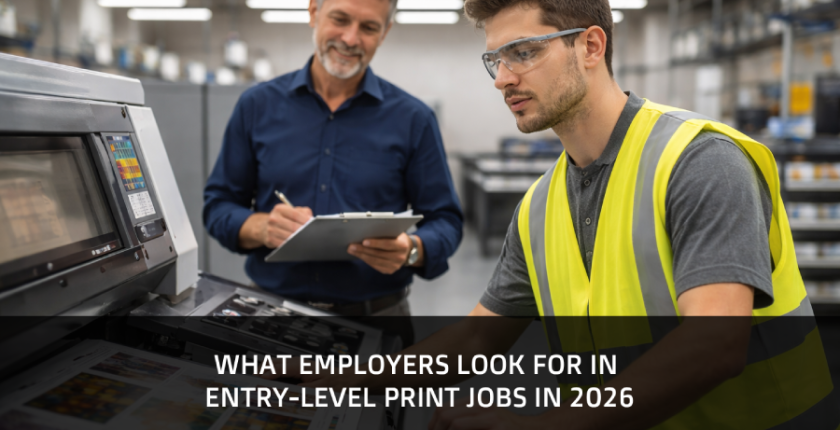
What Employers Look for in Entry-Level Print Jobs in 2026
The printing industry may be more advanced than ever, but one thing hasn’t changed: businesses still need reliable people on the ground. Employers in 2026 will place a higher value on the appropriate skills, attitude, and willingness to learn—especially when hiring for entry-level printing jobs—as technology advances and production becomes more specialized.
If you’re hoping to start a career in print, understanding what employers actually look for can give you a real edge.
Entry-Level Printing Jobs in Today’s Industry
Entry-level roles are the backbone of the print industry. These positions often include print assistants, junior operators, pre-press trainees, finishing assistants, and those entering through printing apprenticeships.
In 2026, many employers view beginner roles as long-term investments. Rather than expecting years of experience, they’re looking for people who can grow into skilled professionals. This makes beginner printing careers more accessible for school leavers, career changers, and hands-on learners.
Basic Technical Knowledge Goes a Long Way
You don’t need to be an expert, but employers expect a basic understanding of how printing works. Knowing the difference between digital, offset, and flexographic printing shows initiative and interest.
Other helpful technical basics include:
- Awareness of print safety procedures
- Understanding file formats like PDFs
- Familiarity with colour modes, bleed, and trim
- Willingness to learn machinery operation and maintenance
For junior print roles, curiosity and hands-on confidence often matter more than formal qualifications.
Soft Skills Employers Value Most
Technical skills can be taught, but attitude can’t. This is why employers consistently prioritise soft skills when hiring for entry-level printing jobs.
Key qualities include:
- Strong attention to detail
- Reliability and punctuality
- Ability to follow instructions accurately
- Clear communication with supervisors and team members
- Staying calm under deadlines
Print production relies on teamwork. Employers want people who contribute positively to the workplace, even in fast-paced environments.
Why Attitude and Trainability Matter in 2026
Modern print workplaces rely on constant learning. New materials, software, and machines are introduced regularly, and employers want junior staff who are open to change.
Showing enthusiasm, asking questions, and being receptive to feedback can quickly set you apart. Many hiring managers say they’d rather train someone with the right mindset than hire someone experienced but resistant to learning.
This approach is especially common in printing apprenticeships, where long-term development is the goal.
Do You Need Qualifications to Get Started?
Formal training can help, but it’s not always required. Certificates, short courses, or TAFE studies can strengthen your application, but many employers are just as interested in hands-on experience and motivation.
Work experience, volunteering, or part-time roles in production environments can be valuable stepping stones. For those unsure where to begin, structured apprenticeships are one of the best pathways into beginner printing careers.
How to Stand Out as an Entry-Level Candidate
To increase your chances:
- Tailor your resume to the role
- Highlight transferable skills like teamwork or mechanical aptitude
- Be sincere about your knowledge and willing to learn more
- Show long-term interest in the printing industry
When applying for entry-level printing jobs, employers are looking for potential, not perfection.
Final Thoughts
In 2026, employers hiring for junior print roles want dependable people with curiosity, commitment, and the right attitude. Technical skills can be taught, but enthusiasm and work ethic make all the difference.
If you’re serious about building a future in print, explore opportunities such as printing apprenticeships and entry-level roles listed on platforms like printing jobs in australia, and take your first confident step into the industry.
Your printing career doesn’t start with experience—it starts with willingness to learn.